Outdoor tiles earn their keep in the first heavy rain
Stand under a car porch during a Malaysian afternoon storm and you learn quickly what an outdoor floor is for. Water arrives sideways, the surface goes slick, and by the time the sun comes back the same tiles are hot enough to feel through slippers. Interior tile advice does not cover any of that, and a good-looking sample under showroom lights says very little about how a tile will behave outside.
Three things decide most outcomes: what the tile is made of, how its surface is finished, and how the base underneath it was built. Colour comes after.
Match the tile to the job: wall, patio or car porch
Wall tiles outside carry almost no load, so the main risks are fading and staining from sun and rain. A patio or garden path sees footfall, furniture and spills. A car porch is the demanding one, with constant vehicle weight, tyre marks, oil and weather all at once. Dense porcelain generally holds up better there than ordinary ceramic, and some ranges are made much thicker than standard for exactly that reason. Niro Granite’s overview of porcelain, stone and cement effect options for patios and porches is a decent place to see how a manufacturer separates these uses.
The Tile Council of North America states the baseline plainly in its exterior tiling FAQ: tiles should be rated by the manufacturer for exterior use, not just good-looking. That handbook is written for climates with frost, which Malaysia does not have, but the points about water and movement carry over to heat and monsoon rain.
Grip, finish and the wet-season test
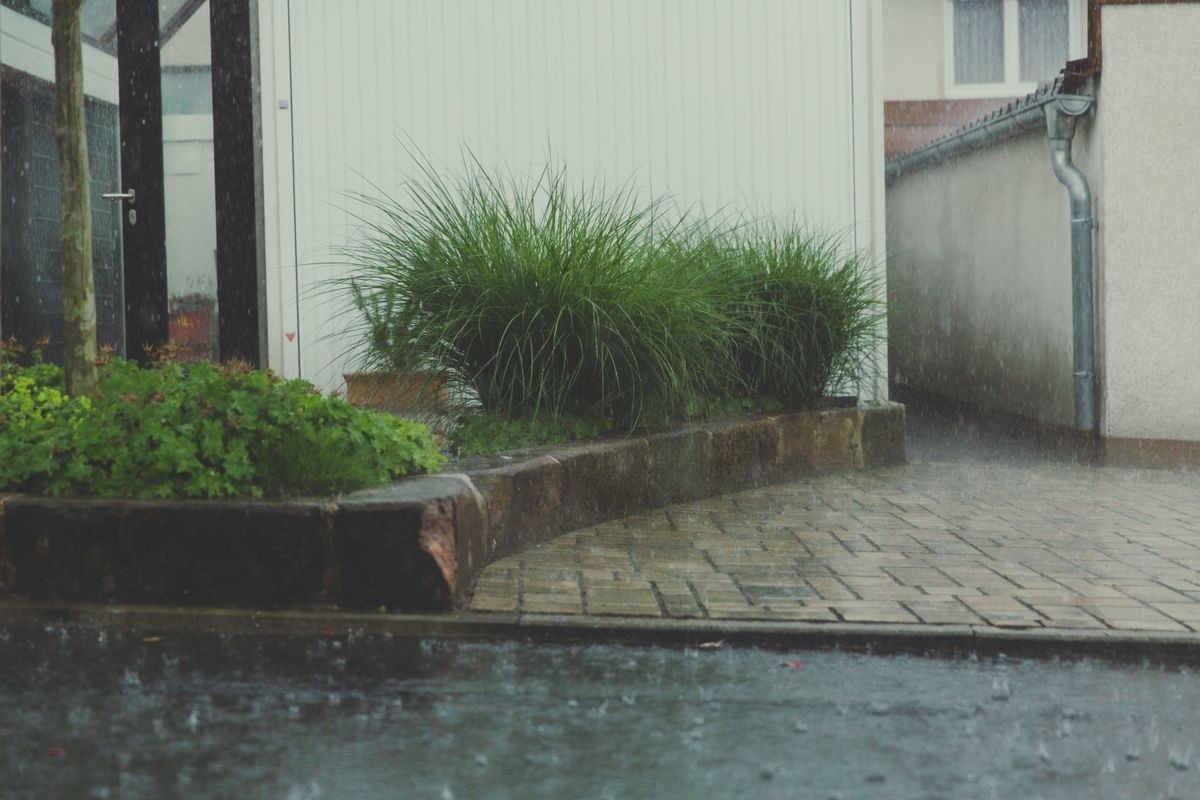
A glossy finish suits a living room. Outside, a matt or textured surface is the safer starting point, because the floor will be wet often and not always from rain: sprinklers, car washing, a wet dog. Texture gives the sole something to hold on to, and a rougher surface also hides the occasional tyre scuff better than a polished one.
Grip is more than finish, though. Some products depend on a built-in surface structure, others on a coating applied afterwards, and the two age differently. A short read like this comparison of Slip Stop finishes and anti-slip coatings helps make sense of the terms on a brochure. Whatever the type, test a damp sample with your own shoes, then with bare feet, before ordering a whole porch worth.
Falls, joints and the base nobody photographs
Most outdoor tile problems start under the tile. A floor that does not slope toward a drain keeps a film of water on its surface, and that is what grows algae and gets slippery. The TCNA notes that a good exterior installation is one that drains water before it has time to soak into the tile or the layers below, and that expansion joints are needed to deal with movement caused by heat and water. For walkways, it also asks for near-complete mortar contact behind each tile and an adhesive rated for outdoor use.
A landscaping supplier shows porcelain paving laid on a mortar bed over a concrete base (about 3 minutes).
In practice that means asking the installer about the fall in millimetres per metre, where the water will go, and what sits under the tile. It also means asking who is doing the work. Malaysia’s Construction Industry Development Board runs contractor registration and construction personnel checks, which is a straightforward way to confirm that a contractor is on the books before a driveway is dug up.
Bigger sizes outside, and what to settle before ordering
Large slabs are popular for patios because fewer joints look clean and the surface is easier to sweep. Outdoors they are also less forgiving. A large tile needs a flatter base and tighter control of the fall, because a small dip that a small tile hides will show up as a puddle under a slab. Niro Granite’s guide to bigger sizes covers the appeal, and the practical test is simply whether your site can be levelled that accurately.
Before you order, write down a short list. What is the area exposed to: sun, rain, vehicles? Is the finish matt or textured? What is the thickness and rating for exterior use? Where does the water run? Who is laying it and how will the edges and joints be handled? If you can answer those five, the colour decision becomes the easy part.